
Scottish Interventional Cardiology
Nursing & Allied Professions
Sharing practice & experience
Welcome to the home of the Scottish Interventional Cardiology Nursing Allied Professions (SICNAP) forum.
Our aim is to provide an opportunity for communication and to promote professional development within interventional cardiology in Scotland. Linking both service users and providers to share and improve practice and developing networking opportunities.
Please feel free to browse around and check back regularly for updates.
Features:


About SICNAP:




Hot Topics:

GJNH has Fastest Door to Balloon Time in UK for pPCI
Statistics showed the Golden Jubilee National Hospital, is leading the UK with the fastest delivery times for potentially lifesaving treatment for heart attack patients. The figures, from the National Cardiac Benchmarking Collaborative, measure the time taken for a patient to receive Primary Percutaneous Coronary Intervention from the moment they enter a hospital. This process now takes just an impressive 21 minutes.

The Scottish Intercollegiate Guidelines Network (SIGN) have published a updated version of SIGN 93 Acute Coronary Syndromes.
New evidence has been published around the time-dependent benefits of reperfusion strategies for the immediate management of patients with ST elevation acute coronary syndromes.
Implementation of the guideline will maximise the number of patients who may have access to the safest and most effective treatment..
Follow the link below to access the full text of the new guideline.

The Interventional Cardiology Team from the Golden Jubilee National Hospital, have been invited to perform a live procedure from their state of the art facility in Clydebank to be broadcast at the world renowned EuroPCR Conference in Paris on Friday 22 May.
The live broadcast takes place on Friday 22 May at 8am.
For more information, head over to http://www.europcr.com/index.php.
Follow the link below to learn more from this event.
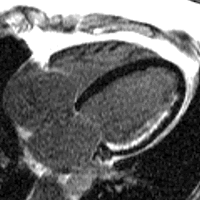
During primary PCI, stent deployment and post-dilatation are associated with no-reflow. No reflow is associated with risk factors such as prolonged duration of ischaemia, heavy thrombus burden, persistent ST elevation and long stent length.
A strategy of deferred stenting for 4 -16 hours to permit the beneficial effects of normalized coronary blood flow and anti-thrombotic therapies may reduce the incidence of no reflow in at-risk STEMI patients. The study is intended to inform the design of a larger multicentre clinical trial.

The BCS cath lab checklist seeks to guide staff in the performance of key safety checks for patients undergoing invasive procedures in the cardiac catheterisation laboratory. The checklist also provides a framework for conducting a ‘team brief’ for all members of the clinical team.
Electronic versions of both checklists will follow shortly, to allow ‘on-screen’ completion using a tablet or computer and facilitating direct upload to a patient’s electronic record.
Hot Research Topic:

CATCH-AMI
Currently Recruiting

2013
